CHANGE MANAGEMENT
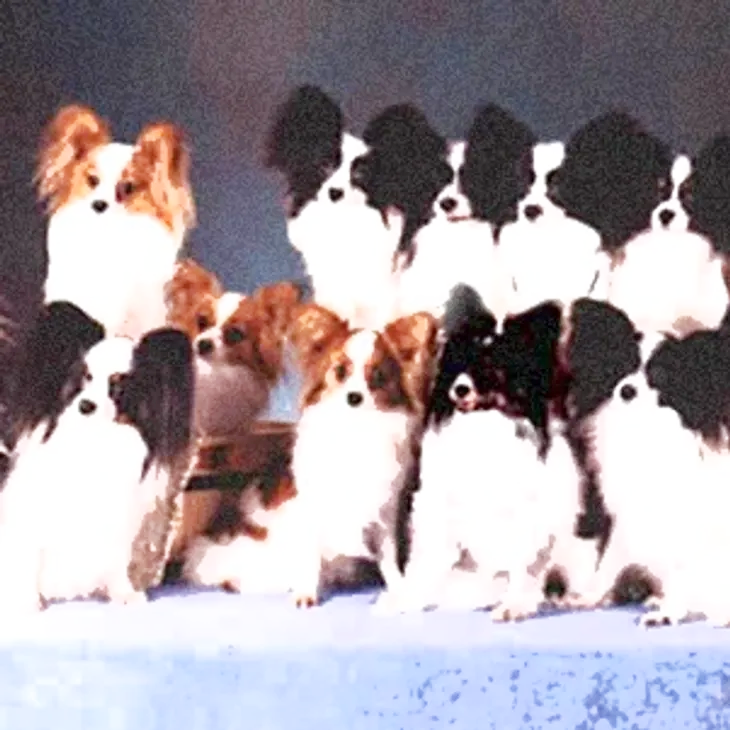
Some interesting and amazing characteristics of papillons are that they are not very bothered by fireworks, like to play chicken with the lawnmower, can squeeze a large bone through a small doggy door, and will notice anything new anywhere in the yard or house. They like to lay on the back of the couch with their head on your shoulder while you watch TV, retrieve their favorite toy for hours, and drive you crazy by biting the squeaker over and over to make a sound.
Everyone has lots of funny stories about their butterfly dogs. You cannot have a papillon without accumulating lots of wonderful memories of their antics. I could go on for hours telling about the funny stuff some of my dogs have done. They may not be able to talk the way we do but they can sure communicate if we just pay attention to their eyes and body language. One of my guys is a dedicated retriever. He brings you the toy and throws it in your lap so you can throw it. One time he came to me and stared at me. When I asked him where the ball was, without turning his head, he looked to the side and back at me. It was clear he was telling me the ball was to my right. Amazing.
Once in a while, I am approached by someone wanting a show dog. Making the decision between show and pet can be difficult at an early age. Sometimes a puppy will be obviously pet quality. I am talking about markings and/or size here. Using the standard as a guide, if a dog has white on its ear or on the head between the ear and corresponding eye, it will not win in the show ring. Right away you know it is not show quality as far as looks go. In every other way, it is a fine dog ready to make some family very happy. I try to get to know the prospective owner by asking questions and finding out what they plan to do with the dog in order to determine if I actually have a dog that would suit their purpose.
Papillons change quite a lot as they grow. To be sure of a dog with show possibilities, you must wait until they are at least 5 months old. So many things can go wrong so as to make a show career impossible. Males can have only one or no testicles. Their jaws can grow unevenly causing an over or undershot bite. Structurally, they could be too big or even too little, there could be short upper arms, narrow rib cage, too long loin, straight stifle or hock, low tail set, tail not carried over the back, topline not level . . . in short, problems with the dog’s conformation that would cause its movement to be faulty. Again, using the standard as a guide, the papillon should be fine-boned with its movement straight both coming (front) and going (rear). There should be reach and drive in their movement when observed from the side. Since they are slightly longer than tall they should not move like a terrier who is built square nor like a miniature pinscher who has a hackney gait.
When placing puppies in a pet home, I will let them go at 3 months of age. I do not feel they are ready for the challenges of a new environment until then. Placing a show dog is another story. They have to be older to be sure they would have a chance in the competitive show ring. I train all of the dogs the same, just as if they were going to be show dogs. They get to go to training class as early as 10 weeks old. I work with them at home first to walk on a leash and standstill on the table for examination. In addition, they learn some words of command like their name, go outside, hurry up (means potty), come, wait and pick up (when picking them up).
The papillon is not for everyone and some papillons never feel comfortable around small children, but someone who wants a smart, happy, go anywhere, do anything companion in a small package, it is ideal.